Website Redesign Process: Phases, Timeline & Checklist

A website redesign is often described as a visual update. In practice, the new interface is only the most visible part of a much larger process.
A company may come to us because its website feels outdated. But once we begin reviewing the project, we often discover deeper problems: the product has changed, navigation has become confusing, content no longer reflects the business or the existing technology makes routine updates unnecessarily difficult.
At Cuberto, we begin every redesign by understanding what is no longer working and what the new website needs to achieve. Only then can we define the right structure, scope, technology and creative direction.
This article explains how our website redesign process works, what happens at each stage and what companies should prepare before starting a project.
Before we design anything, we define the problem
One of the first questions we ask is:
“What is the current website preventing the business from doing?”
or more simply:
“What is no longer working, and why are you considering a redesign?”
The answer is different for every company. For example:
The website may no longer reflect the maturity of the product.
Visitors may struggle to understand the value proposition or the difference between several services.
The current website may load too slowly, affecting both user experience and conversion rates.
The company may have grown significantly over the past few years, making the existing structure outdated or difficult to scale.
The business may be going through a broader rebrand, while the current website still reflects the old direction.
Sometimes the website is not the main problem at all.
Low conversion rates may be caused by unclear positioning, an uncompetitive offer, weak traffic acquisition or an inefficient sales process. Redesigning the interface without investigating these factors can produce a more attractive website without improving the business result.
That is why the first stage of the project is not visual design. It is understanding the current situation and identifying which problems the redesign can realistically solve.
Our website redesign process
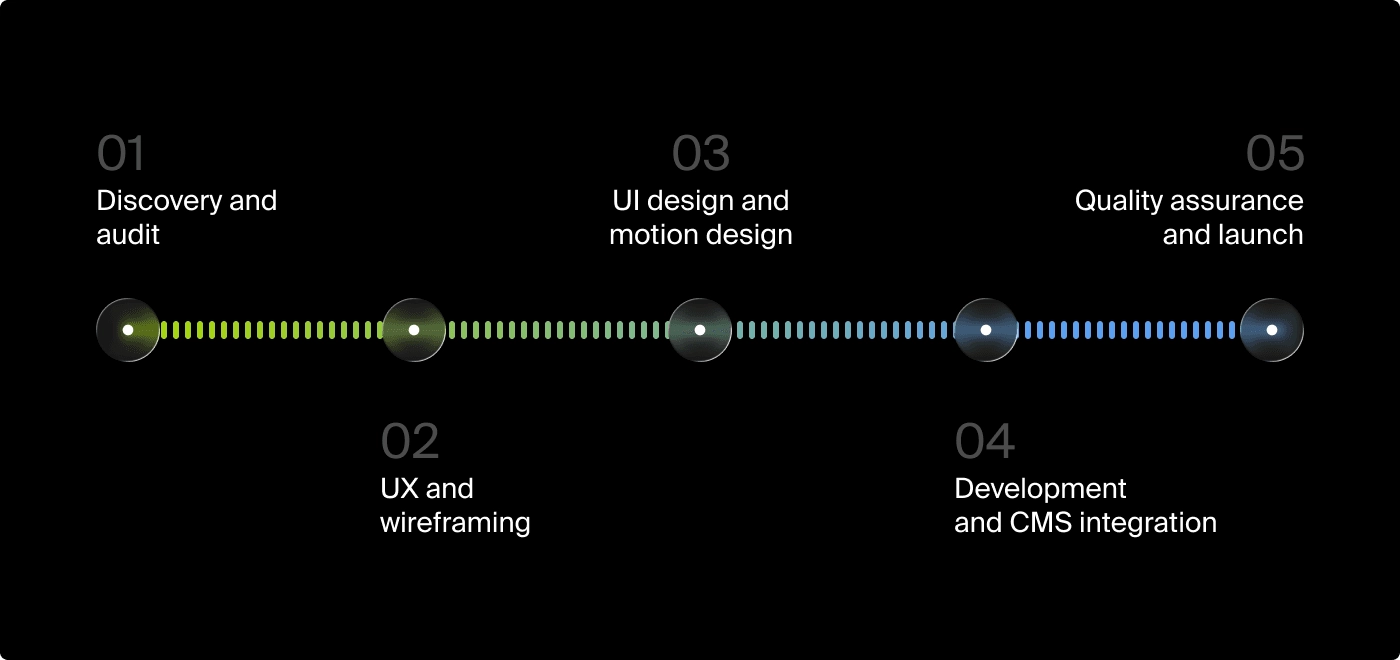
The exact scope depends on the project, but most of our website redesigns move through five main phases:
Discovery and audit
UX and wireframing
UI design and motion design
Development and CMS integration
Quality assurance and launch
These stages are connected. Decisions made during discovery affect the sitemap. The sitemap affects content. Content affects layouts. The visual system affects frontend architecture and CMS requirements.
Treating each stage as an isolated service usually leads to inconsistencies later in the project.
Phase 1: Discovery and audit
We begin by reviewing the current website, the product, the business model, competitors, content, analytics and technical limitations.
The goal is not to criticize everything that already exists. A redesign should preserve what works and improve what does not.
Existing pages may already attract valuable organic traffic. Some user journeys may perform well. Certain content, features or familiar navigation patterns may still be useful to customers. Replacing them without evidence can create new problems rather than solve existing ones.
During discovery, we normally look at several areas:
Business goals and positioning
Primary audiences
Existing website structure
Content quality and volume
User behavior and conversion paths
Search visibility
Technical performance
CMS limitations
Third-party integrations
Internal workflows
By the end of discovery, we have a clear understanding of what should be preserved, what needs to change and how extensive the redesign needs to be.
Phase 2: UX and wireframing
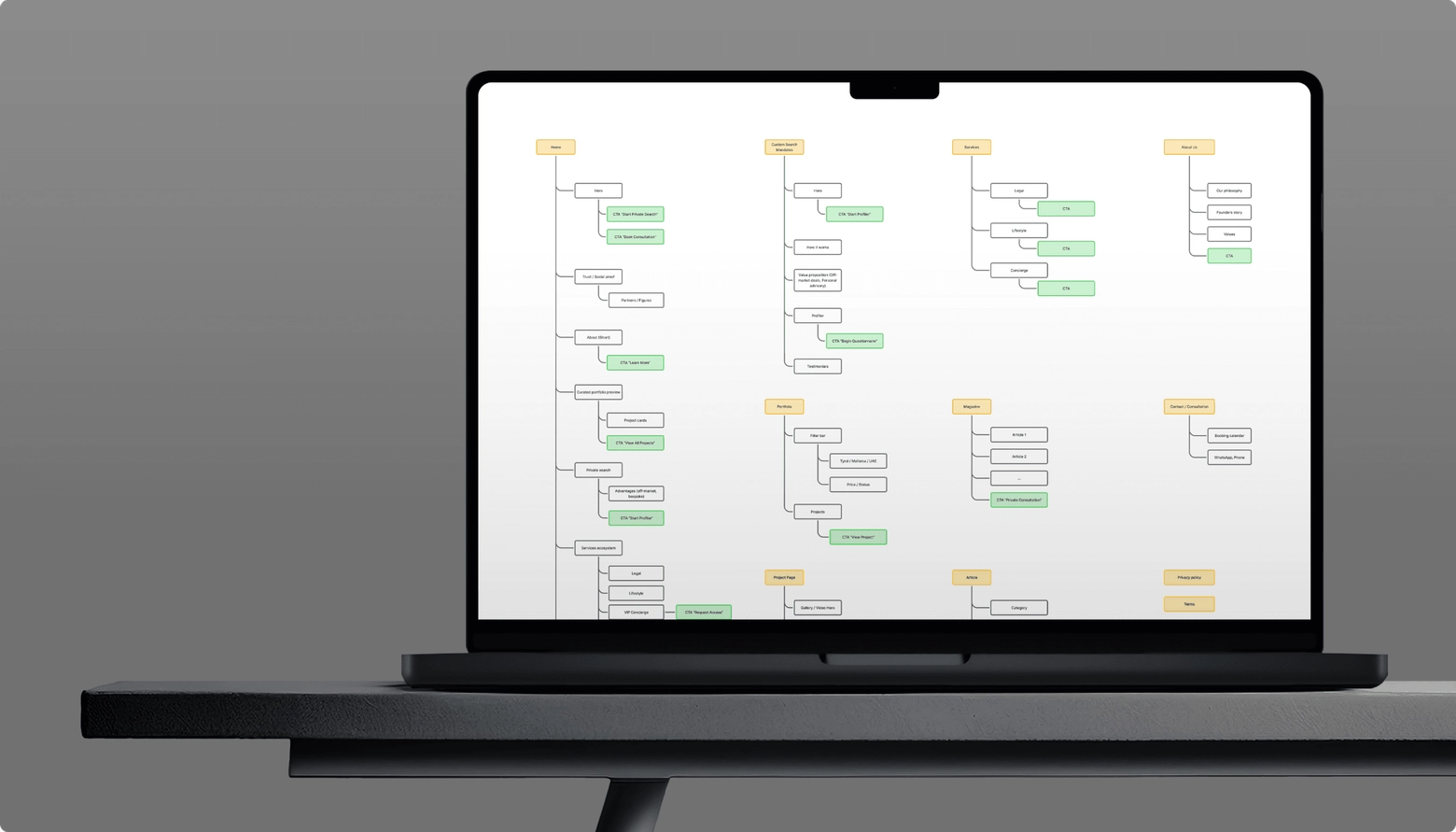
Once the main problems and goals are clear, we organize the website around the needs of its users rather than the company’s internal structure.
We define:
Primary audiences
Key user journeys
Sitemap
Navigation
Page objectives
Content hierarchy
Conversion paths
Relationships between products and services
For a smaller website, this stage may be relatively straightforward. For a large corporate or SaaS platform, it may require reorganizing years of accumulated content across products, markets, locations and audiences.
We scope this work based on unique page templates, user journeys, content requirements and technical complexity.
A 30-page corporate website built from a few reusable templates may be simpler than a 5-page experience where every page has a unique structure, custom storytelling and complex interactions.
Wireframes allow us to define the structure of each key page before introducing the final visual style.
At this stage, we determine:
What users need to understand first
How much information should appear on each page
Where calls to action should be placed
Which product benefits need explanation
Where social proof or case studies are required
How users move from one section to another
Designing around generic placeholder text may seem faster, but it often creates additional work later. A layout built for a short paragraph may no longer work when the final copy needs to explain several product features, audiences and benefits.
The complete copy does not always need to be finalized before design begins, but the key messages, hierarchy and approximate content volume should already be understood.
Wireframes also make it easier to test ideas. Changing the order of information at this stage is much faster than rebuilding a finished interface or rewriting developed components.
For more complex projects, we may create clickable prototypes to test important journeys before moving into detailed visual design.
Phase 3: UI design and motion design
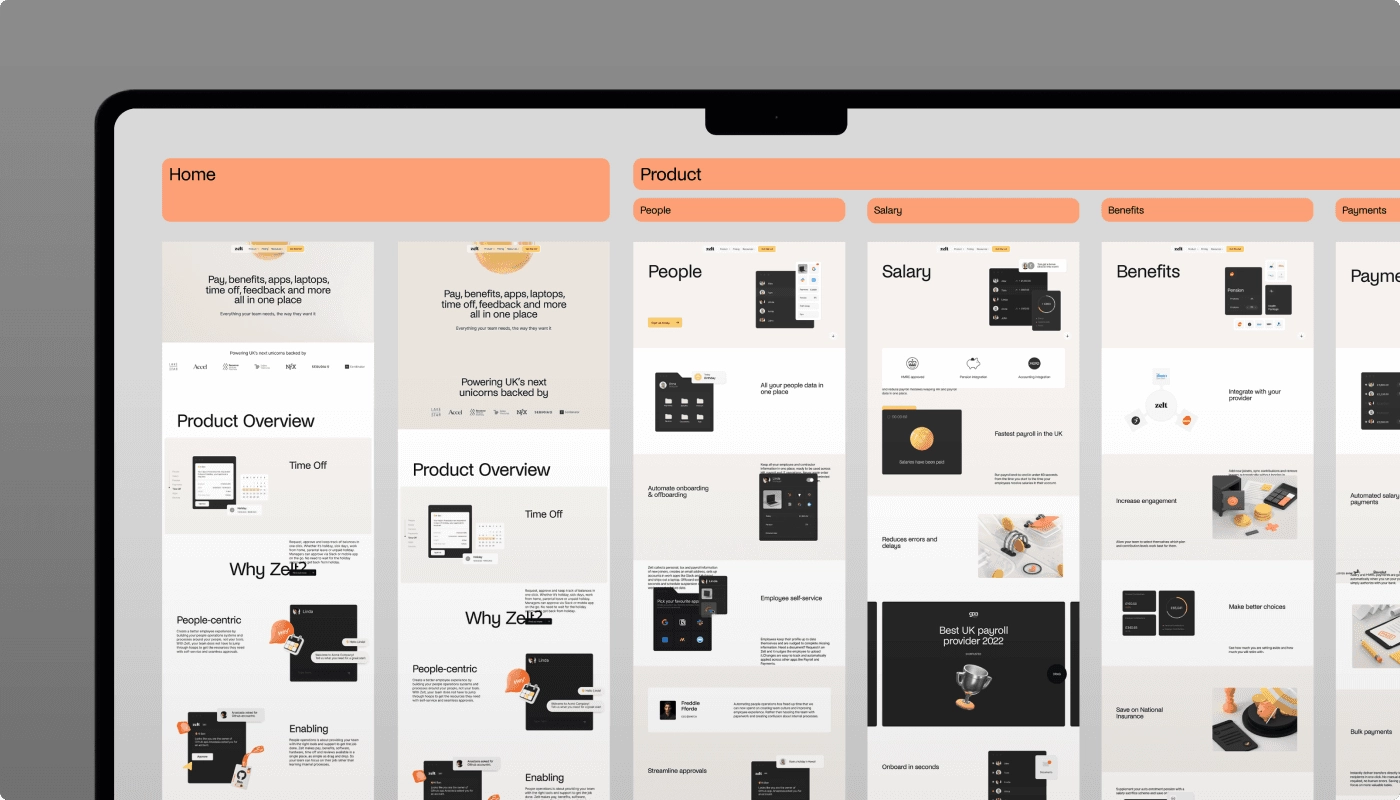
Once the structure is approved, we begin defining how the website should look and feel.
We usually start with one or two key pages that contain the most important elements of the future system. This allows us to explore typography, color, imagery, composition, interface components, motion and the overall creative direction without designing the entire website at once.
The first concept establishes the direction for discussion and refinement. For fixed-scope projects, the number of revision rounds is defined in the proposal. To make this process efficient, we ask clients to share relevant references, explain their preferences and provide clear feedback. Some clients want to stay closely involved in the creative direction, while others give us more room to explore within the agreed project goals.
Animation should have a clear purpose. It may guide attention, explain how a product works, create continuity between sections or provide feedback after an action. Adding movement without considering usability and performance usually makes the experience heavier rather than better.
Phase 4: Development and CMS integration
Once the visual system and responsive layouts are approved, the project moves into development. The technology is selected based on the actual requirements of the website. A small marketing website, a multilingual corporate platform and an interactive digital experience do not need the same architecture.
Depending on the project, our development scope may include:
Responsive frontend development
Custom animation and interactions
CMS configuration
Backend development
Forms and CRM integration
Analytics and tracking
Localization
Search
Content migration
Third-party APIs
Deployment infrastructure
For custom projects, we may use technologies such as Astro or Next.js for the frontend, GSAP for interactions and a headless CMS such as Strapi when the client needs flexible content management. The CMS is treated as part of the final product, not simply as a technical requirement. A website may look impressive to visitors but still fail internally if the marketing team cannot manage it efficiently. Editors should be able to create and update content without breaking layouts or relying on developers for routine changes.
Phase 5: Quality assurance and launch
Quality assurance covers the complete website, not only individual pages.
Before launch, we review:
Responsive layouts
Browser compatibility
Navigation
Forms
CMS behavior
Integrations
Analytics events
Performance
Accessibility
Metadata
Redirects
Indexing settings
Testing should use real content. Long headlines, translated copy, unusual image proportions and missing media often reveal issues that remain invisible in polished design files.
SEO migration also needs to be planned before launch. When URLs or page structures change, we map valuable existing pages to their new locations, prepare redirects, review metadata and make sure the new website can be crawled and indexed correctly.
Launch itself should be treated as a controlled technical process rather than a single publish button. We verify backups, deployment settings, forms, analytics, redirects and integrations before going live. The most important user journeys are tested again on the production domain immediately after deployment.
For larger platforms, a staged launch may be safer than moving all users to the new website at once.
How the process changes from project to project
The main stages of our process remain consistent, but the focus changes depending on the client’s starting point, business goals and technical requirements.
Punto Pago: Evolving a Product into a Digital Ecosystem
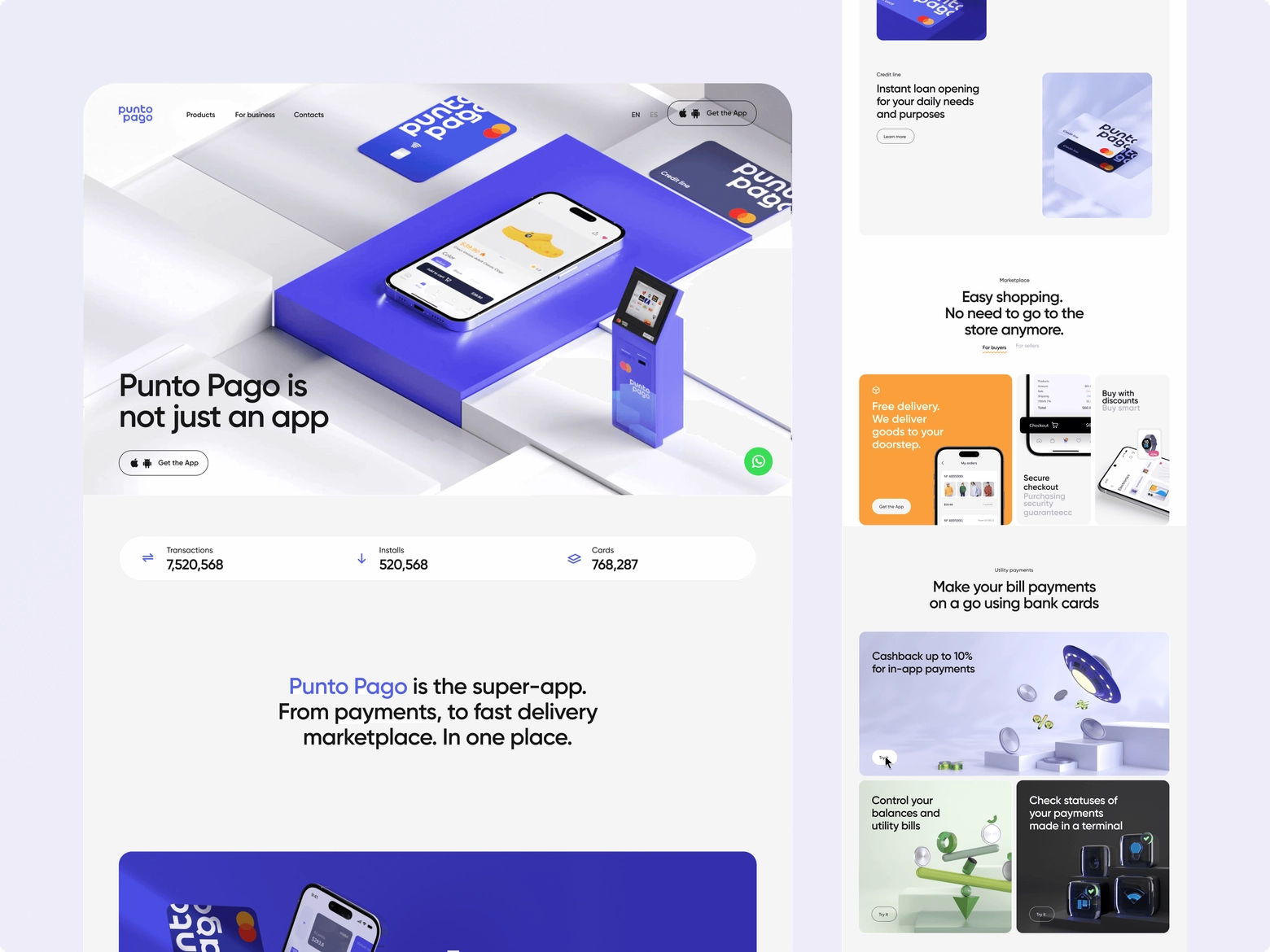
When we started working with Punto Pago, the company was primarily known as a utility payment service. As the product evolved into a super-app combining payments, bank cards, credit, transfers and a marketplace, its entire digital presence needed to evolve with it.
The website could not be redesigned in isolation. Our work included a broader brand transformation, product strategy, mobile app development and a visual system capable of supporting a growing ecosystem of services.
In a project like this, discovery goes far beyond auditing the existing website. We need to understand how the product is evolving, how its services connect and how they can be presented as one coherent experience.
FIND Real Estate: Building the Brand and Platform Together
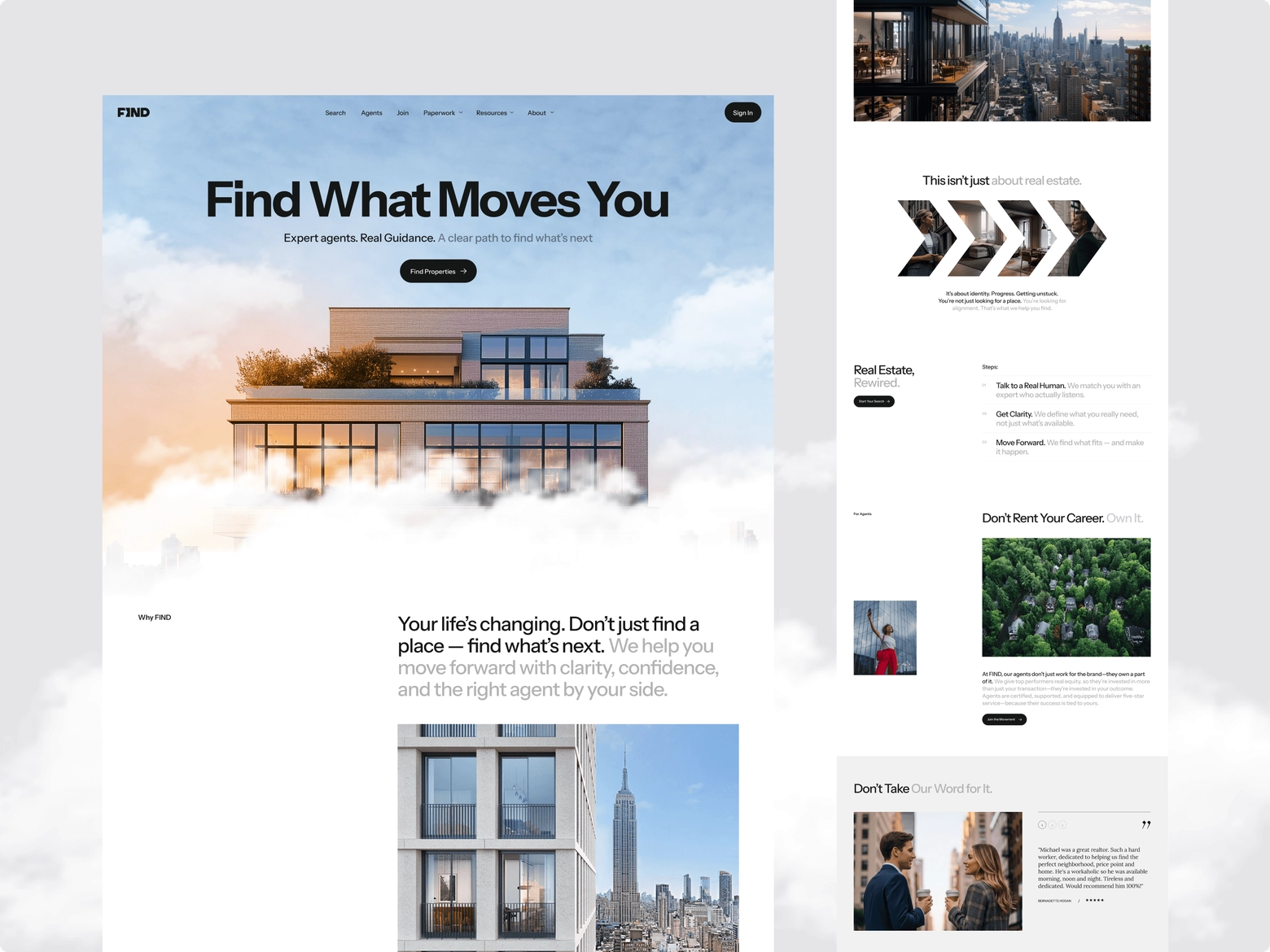
FIND Real Estate started from a different point. The project combined brand identity, UX/UI design and the development of a scalable real estate platform.
The main challenge was to make property discovery feel simple across a large and constantly changing catalog. Users needed to browse, filter and compare listings, while the platform also had to serve buyers, sellers, renters and real estate professionals.
Because the brand and platform were created together, positioning, navigation, visual language and technology developed as parts of the same system rather than separate workstreams.
These two projects followed the same general process, but required a different emphasis at every stage. Punto Pago involved transforming and scaling an existing product ecosystem, while FIND required us to build the brand and digital platform as one connected system.
This is why we do not apply exactly the same workflow to every redesign. The stages may be similar, but the scope and priorities depend on what already exists and what the business is trying to achieve.
How long does a website redesign take?
A focused redesign may take several weeks. A custom corporate or SaaS website usually requires several months, while a large enterprise platform may take six months or longer.
| Project type | Typical timeline |
|---|---|
| Focused redesign | 4–6 weeks |
| Small custom marketing website | 6–8 weeks |
| Corporate or SaaS website | 8–12 weeks |
| Complex enterprise platform | 4–6 months or more |
These ranges are general benchmarks, not fixed schedules.
The timeline also depends on the client’s ability to provide content, consolidate feedback and approve decisions on schedule. A delayed review can affect the project just as much as additional design or development work.
Some stages can overlap. Development may begin with approved components while design continues on secondary pages. Content and media production may also continue alongside UX and UI work.
Launch is not the end
Publishing the new website is an important milestone, but it is not the final measure of success.
After launch, we compare the website’s performance with the goals defined during discovery. Depending on the project, this may include conversions, lead quality, organic visibility, loading performance, user behavior and the efficiency of the CMS workflow.
The first weeks of real usage may reveal opportunities that were impossible to identify during design and testing.
A particular page may need clearer messaging. Users may interact with navigation differently than expected. The marketing team may identify improvements to the CMS workflow.
These observations should become a prioritized optimization plan rather than a reason to redesign the entire website again.
The strongest digital platforms continue to evolve through smaller, evidence-based improvements after launch.
Frequently Asked Questions
How long does a website redesign take?
A focused redesign may take approximately four to six weeks. A small custom marketing website usually takes one and a half to two months. Corporate and SaaS websites typically require two to three months, while complex enterprise platforms may take four months or longer.
Should content be prepared before design?
The key messages, content hierarchy and approximate amount of copy should be defined before detailed visual design begins. Final copy may continue to evolve during the project, but leaving all content until the end usually causes delays and additional revisions.
Does a website redesign include development?
Not always. At Cuberto, we can handle the complete process from discovery and design to frontend development, CMS integration, testing and launch. We can also work on strategy and design only when the client already has an internal or external development team. The proposal always defines which phases are included.
Can a website redesign affect SEO?
Yes. Changing URLs, navigation and content without a migration plan can reduce organic visibility. Existing high-value pages should be identified before launch, with redirects, metadata and internal links prepared in advance.