Best UI/UX Design Agencies in the USA (2026)
The U.S. has thousands of agencies offering UI/UX design, but their capabilities can be very different.
Some specialize in early-stage products and MVPs. Others work primarily with enterprise software, complex SaaS platforms or large consumer products. Some focus almost entirely on research and design, while others can take a project through development and launch.
That difference matters when choosing a partner. A strong portfolio alone does not tell you whether an agency has experience with your type of product, can handle the required level of complexity or has the team needed to carry the work through implementation.
For this guide, we reviewed agencies based on their recent work, product design capabilities, UX expertise, experience with complex digital products and ability to support implementation.
The companies below are not ranked from first to last. Each one is included because it is a strong option for a particular type of UI/UX project.
Disclosure: Cuberto is included in this list. We work across product strategy, UX/UI, motion and development, so this comparison is based partly on the same criteria clients use when evaluating us alongside other agencies.
Quick comparison
| Agency | Call them for | Most relevant to |
|---|---|---|
| Work & Co | A flagship digital product at enterprise scale | Enterprise and global product teams |
| Clay | UI/UX tied closely to brand and product strategy | SaaS, fintech and digital-first companies |
| Cuberto | UX/UI, motion and development from one team | Startups, scale-ups and technology companies |
| Instrument | Product design connected to a larger brand ecosystem | Consumer technology and established digital brands |
| IDEO | Research before the solution is clear | Innovation teams and complex new product problems |
| Huge | Customer experience at enterprise scale | Large organizations and digital ecosystems |
| Neuron | Complex enterprise software UX | B2B SaaS and internal enterprise platforms |
| Ramotion | Product UX that needs to stay close to the brand | SaaS, B2B and technology businesses |
| Goji Labs | Product strategy, UI/UX and development together | Startups and growing digital products |
| Big Human | Practical product design with development behind it | Startups and established consumer products |
| HTEC Momentum | UX for complex software and AI products | Enterprise technology and engineering-heavy teams |
What we checked
We focused on five things:
- Recent shipped products, not concept work
- UX research and product strategy capabilities
- Experience with complex digital products
- Design systems and interaction design
- Whether the agency can support development and implementation
AI has made polished interface concepts much easier to produce. We therefore looked more closely at launched products, detailed case studies and the teams behind the work than at presentation quality alone.
11 UI/UX design agencies worth considering
Work & Co
Work & Co is a global digital product company known for combining product design, technology and delivery within one team. Founded in Brooklyn in 2013, the company has worked with Apple, Google, IKEA, Mercedes-Benz, Gatorade and PGA TOUR across mobile products, commerce platforms and large digital ecosystems. In 2024, Work & Co became part of Accenture Song.
The company is especially relevant for enterprise and global product teams that need design and engineering to stay closely connected throughout the project. Its cross-functional model brings designers, product managers and developers together from the start, which is particularly valuable for large, complex digital products that need to scale reliably.
Clay
Clay is a San Francisco-based digital product and brand design company that combines UX/UI, branding, websites and development within one practice. Its portfolio includes product and digital work for companies such as Google, Slack, Snapchat, Coinbase, Discover, Amazon and Meta, covering everything from mobile applications and enterprise tools to interactive web experiences and design systems.
The agency is particularly relevant for technology, fintech and SaaS companies where product experience and brand need to feel like parts of the same system. Clay also has its own engineering team, which makes it a strong option when the work needs to continue into implementation rather than ending with a design handoff.
Cuberto
Cuberto is a digital agency working across product strategy, UX/UI, motion, branding and development. For more than 15 years, the team has delivered 300+ projects, ranging from mobile products and enterprise platforms to SaaS interfaces and complete digital ecosystems. Recent work includes Cisco, FIND, Kelvin Zero, Punto Pago and DaoWay.
Cuberto is especially relevant when visual quality, interaction design and development need to stay closely connected. Designers and developers work within the same team, allowing complex motion, product behavior and technical constraints to be considered while the experience is still being designed rather than solved after handoff.
Instrument
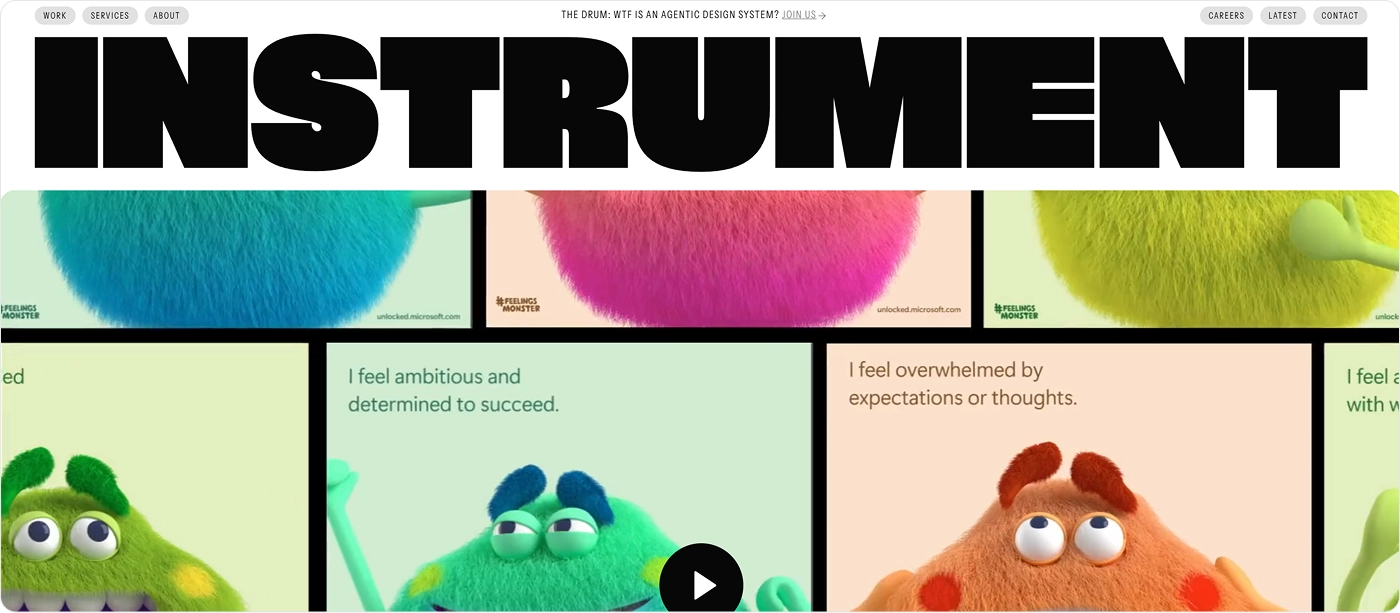
Instrument is a digital-first design and technology agency working across product, brand and marketing. The company has been operating for more than 20 years and has a team of 350+ people across Portland, New York and remote locations. Its product portfolio includes work for Nike, Google, Oura, Marriott, Google TV and Qatar Airways, alongside broader relationships with brands such as Spotify, Netflix, Uber and Stripe.
Instrument is particularly strong when a digital product needs to sit naturally inside a larger brand ecosystem. Its work ranges from consumer applications to large design systems, making it relevant to established companies that need product UX, visual language and technology to remain consistent across multiple touchpoints.
IDEO
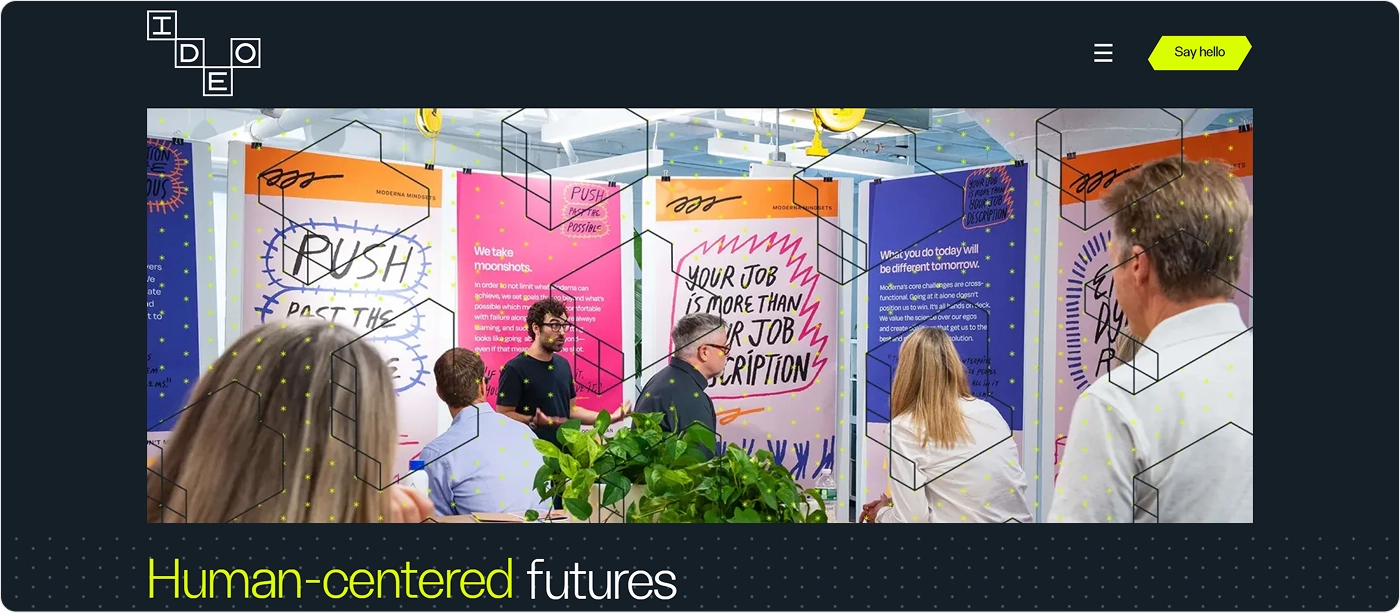
IDEO is a global design and innovation company with roots in Silicon Valley and a long history of human-centered design. Rather than focusing only on interface production, the company works across research, product and service innovation, business design and organizational change, helping clients define what should be built before moving into the final solution.
That makes IDEO particularly relevant when the challenge goes deeper than redesigning an existing interface. Companies exploring a new product category, service model or customer experience can use its research and prototyping capabilities to validate the underlying idea before committing to a full product direction.
Huge
Huge is a design and technology company founded in Brooklyn in 1999. Today it works across products and platforms, customer experience, brand, commerce and AI, with projects for companies including Google, McDonald’s, NBCUniversal, Planet Fitness and LPGA. Its product practice covers strategy, design, engineering, platforms and ongoing digital operations rather than UI/UX in isolation.
Huge is most relevant to large organizations where the experience spans multiple channels, internal teams and technology systems. It operates closer to an enterprise transformation partner than a specialized boutique UX studio, making it suitable when product design is only one part of a much broader digital program.
Neuron
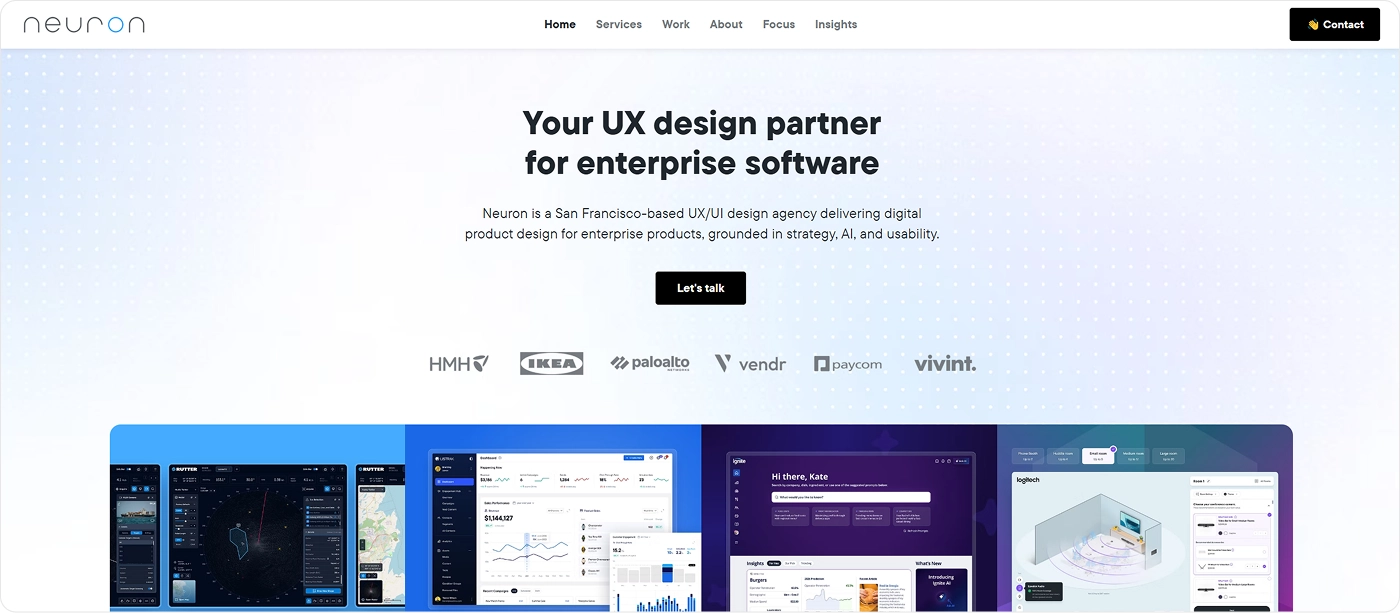
Neuron is a UX/UI agency focused specifically on B2B and enterprise software. Its work centers on complex workflows, workplace applications, SaaS products and data-heavy platforms, with services covering product strategy, UX/UI design and DesignOps.
The agency is particularly relevant for companies dealing with products that have accumulated complexity over time. Rather than emphasizing expressive brand experiences, Neuron focuses on making enterprise software easier to understand and operate, while also helping internal product teams improve design systems and collaboration with engineering.
Ramotion
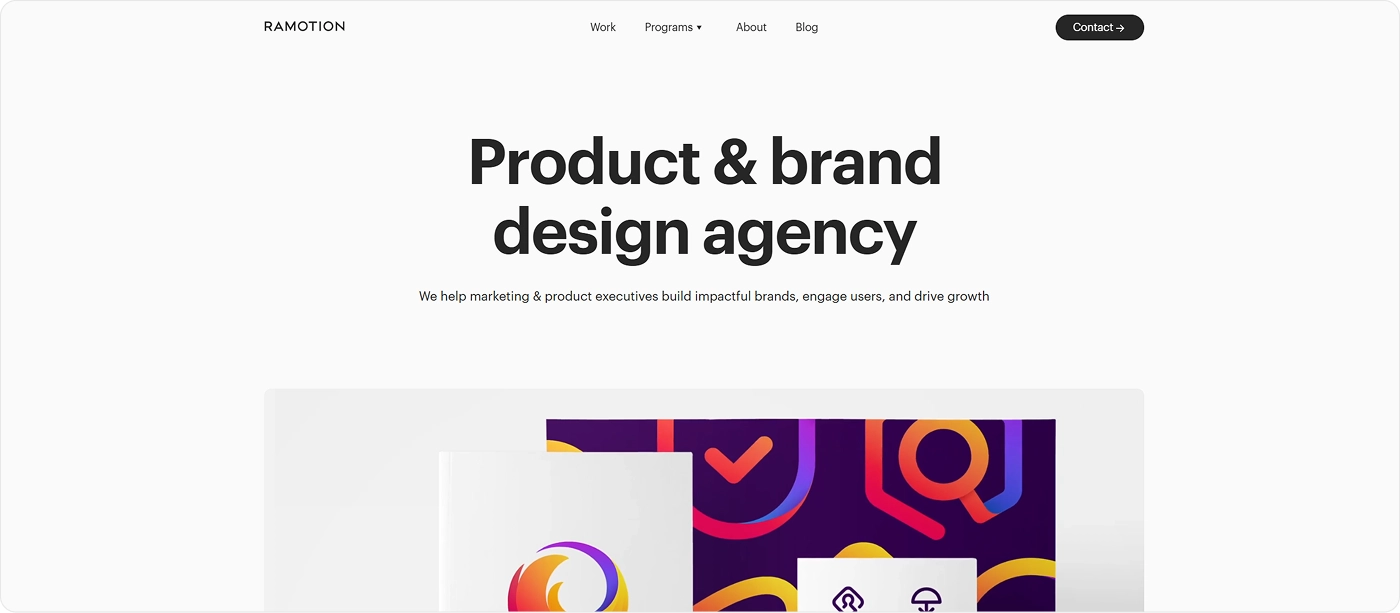
Ramotion is a product and brand design agency working primarily with technology, SaaS and B2B companies. The studio has more than 15 years of experience and combines UX/UI, branding, web design and development, with product work connected to companies such as Salesforce, Turo, Adobe, Firefox and NBCUniversal.
Its main strength is the connection between product experience and brand. Ramotion is a strong fit for growing technology companies that need to improve complex workflows or build a scalable design system without allowing the product interface and the external brand to evolve in different directions.
Goji Labs
Goji Labs is a Los Angeles-based digital product agency that combines product strategy, UI/UX design and software development. The agency is particularly relevant when a company needs more than an external design team. Strategy, product design and engineering sit under the same roof, making Goji Labs a practical option for teams that need help defining what to build and then carrying that work through development and launch.
Big Human
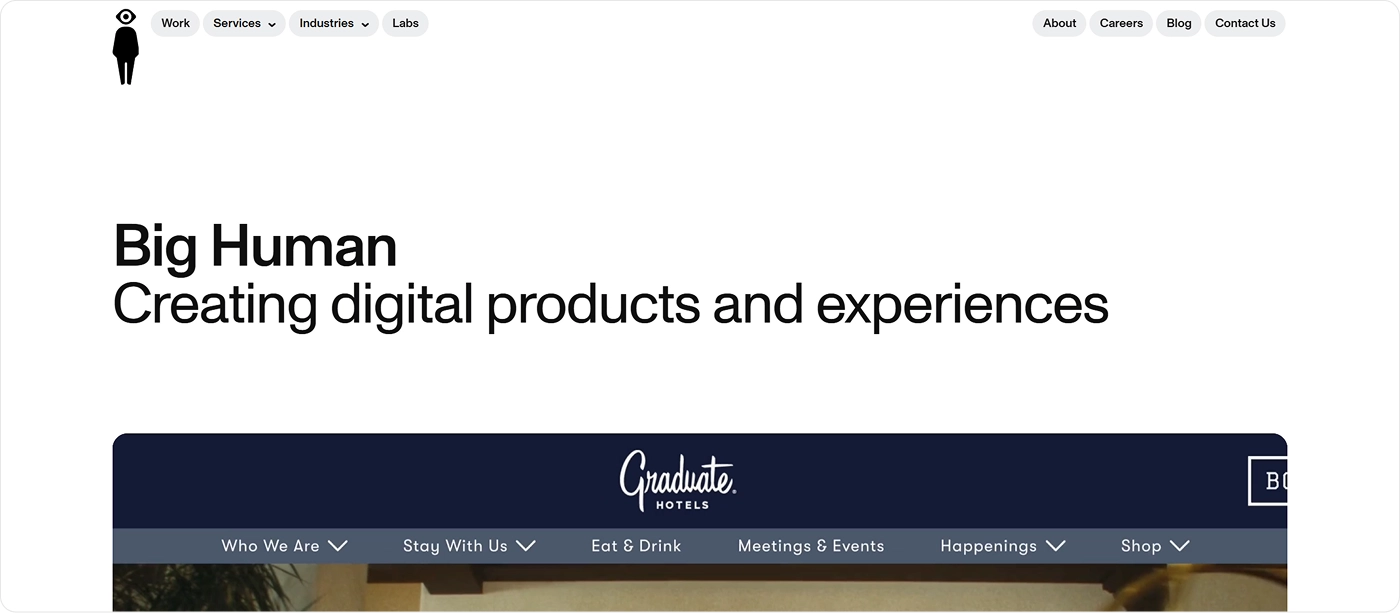
Big Human is particularly relevant for companies looking for a smaller, hands-on product team that can stay involved from strategy through implementation. Because the studio also incubates its own products, its approach tends to be closer to product building than to a traditional design consultancy that stops after delivery of the interface.
HTEC Momentum
HTEC Momentum is the product strategy and design practice within HTEC, combining UX/UI, product management and strategy with the wider company’s engineering, AI and data capabilities. The practice grew out of Momentum Design Lab and now operates as part of a much broader digital engineering organization.
That combination makes HTEC Momentum particularly relevant for technically demanding enterprise products, AI platforms and software where product design needs to stay closely connected to engineering and technical architecture. It is less of a standalone creative studio and more of an integrated product and engineering partner for larger technology programs.
Before you choose a UI/UX agency
Start with the business problem, not the interface
“We need a new UI” gives an agency very little to work with.
With AI making polished interface concepts much easier to produce, visual quality alone is no longer enough to evaluate an agency. The more important question is what the product or website needs to improve. For example:
Our website gets traffic, but very few visitors become qualified leads.
Or:
Users reach the product, but too many drop off during onboarding.
A strong agency should want to understand why this is happening before discussing colors, components or visual references.
Look at real case studies, not just positioning
Agency websites are easy to make convincing. Service descriptions, testimonials and polished presentations can all sound impressive. Real case studies tell you much more.
Look for real launched products and try to understand what the agency actually did. Was it responsible for research, UX and the interface, or only the visual layer? Did the work reach production? Does the case explain the original problem and what changed as a result?
The closer those projects are to the complexity of your own, the more useful the portfolio becomes.
Talk to the team before making a decision
Schedule a call before making a final decision. A conversation usually tells you much more than a proposal. Experienced teams can discuss trade-offs, technical constraints, process, timelines and likely risks without relying on prepared answers.
Pay attention to the person representing the agency as well. If they can answer detailed questions about process, previous projects and technical trade-offs without falling back on a prepared pitch, that usually tells you a lot about the team’s actual experience.
Decide how much of the product you want one team to own
Some companies already have strong internal engineering and only need UX research and product design. Others need one partner to take responsibility for strategy, UX/UI, motion, development and launch.
Both models can work. The important part is deciding this before choosing an agency. If several disciplines need to work closely together, it is usually easier to select a team that already operates that way than to connect separate design and development vendors later.
Frequently asked questions
What does a UI/UX design agency do?
A UI/UX agency studies how people use a digital product, identifies problems in the experience and designs how the product should work and look. Depending on the project, that can include user research, product strategy, user flows, wireframes, prototypes, interface design, motion, testing and design systems.
How long does a UI/UX project take?
A focused UX audit or redesign of several important flows may take a few weeks. Designing a complete SaaS platform, mobile app or new digital product usually takes several months, especially when research, testing and a large design system are included.
Should the same agency handle UX and UI?
Usually yes. UX decisions determine structure, hierarchy and behavior, while UI determines how those decisions are communicated through the interface. Separating them between unrelated teams often creates unnecessary handoffs.
Should the design agency also develop the product?
Not necessarily. If you already have an experienced engineering team, a design-only engagement can work well. If you do not, there is an advantage to having developers involved while the product is being designed so technical constraints, interaction details and implementation decisions can be resolved before handoff.
Start with three agencies, not eleven
You probably do not need to contact every company on this list.
Pick three or four teams whose experience is closest to the problem you are trying to solve. Give them the same product context, goals and constraints, then compare how they approach the problem rather than how polished the pitch looks.
If you need product strategy, UX/UI, motion and development to stay within one team, tell Cuberto about your project.